
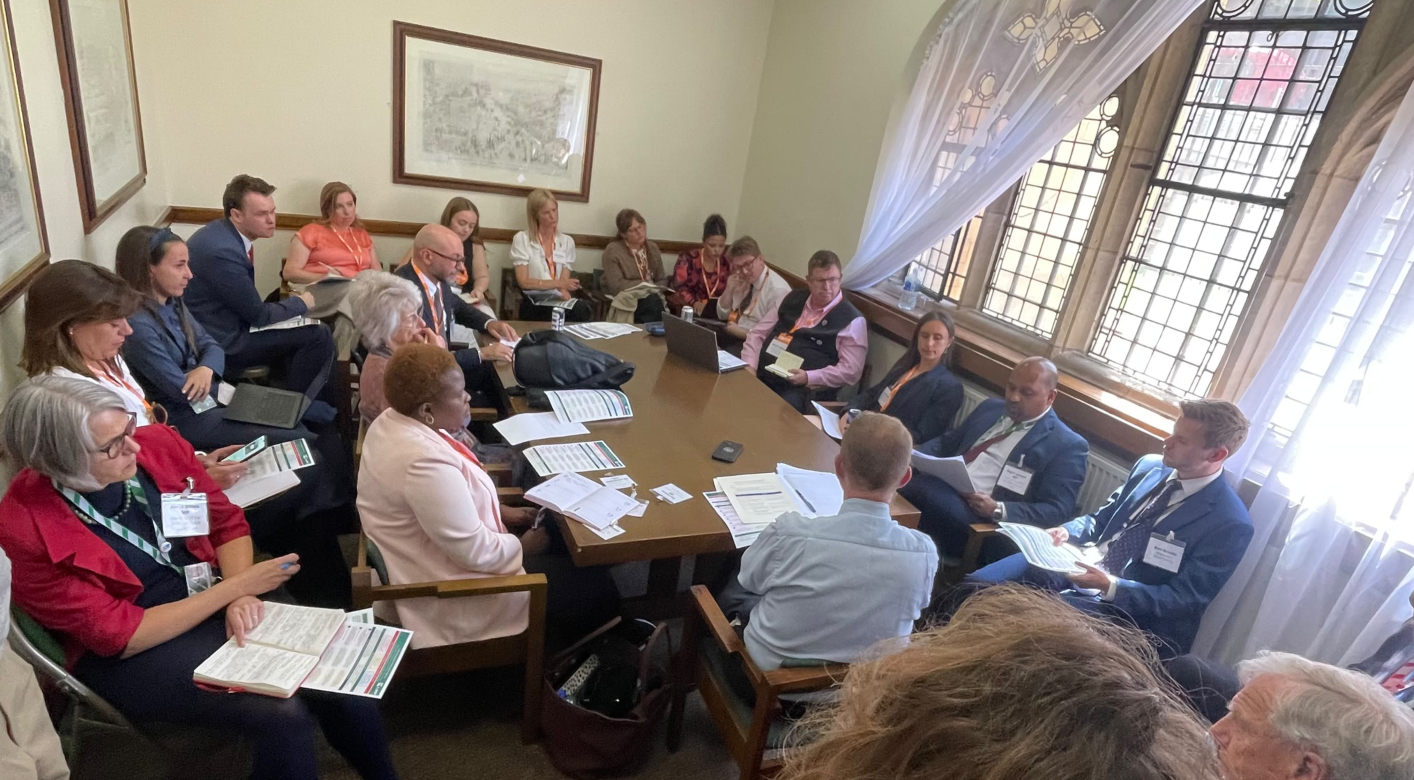
LaMP’s Salvatore Petronella and Laurel Hart brief MPs and peers at the APPG roundtable on Migration and Adult Social Care, 9 June 2026.
On 9 June 2026, LaMP’s Salvatore Petronella and Laurel Hart briefed MPs and peers at an All-Party Parliamentary Group (APPG) roundtable on Migration and Adult Social Care, chaired by Tim Farron MP. The discussion brought together representatives from across the migration and care sectors to examine how the UK’s migration system can better support workforce needs, protect workers, and deliver high-quality care.
Drawing on 15 months of consultation and engagement across the migration and care sectors, LaMP shared evidence and emerging proposals developed through conversations with more than 100 stakeholders, including care providers, employers, worker representatives, migrant workers, regional hubs, matching platforms, and policymakers.
One year on
The UK’s Immigration White Paper, published in May 2025, confirmed the closure of the adult social care visa route to new overseas applications – citing concerns over worker exploitation and a stated intention to end reliance on international recruitment in favor of domestic workforce development. One year on many of the challenges that prompted debate about the system remain unresolved.
By 2045, the number of people aged over 80 in the UK is projected to nearly double, and the sector is expected to require an additional 470,000 care workers. Around 131,000 vacancies remain unfilled, in the sector, while an estimated 20,000+ displaced migrant care workers remain out of work, with limited visibility of their skills, status or readiness to re-enter the sector.
Against this backdrop, LaMP presented a set of proposals aimed at addressing immediate workforce challenges while informing the design of any future migration pathway for the sector.
A dual-track response
Drawing on evidence gathered through its consultation process, LaMP outlined two levels of intervention: immediate action to address current system failures and a set of principles to guide future reform.
A central proposal is the creation of a streamlined national registry of care workers. Such a system would provide a clearer picture of the workforce, validate existing skills and qualifications, and support workers to move safely between employers. While many of the necessary components already exist, they remain fragmented across programs and institutions.
LaMP also highlighted the need for stronger workforce matching and upskilling programs. Existing regional matching initiatives via Regional Partnerships have achieved placement conversion rates of just 10–15% and have seen significant funding reductions. Better coordination and targeted investment could help connect displaced workers with vacancies more effectively while addressing skills gaps and supporting credential recognition.
Principles for future reform
Alongside immediate interventions, LaMP proposed four principles to inform the design of any future adult social care migration route:
-
-
- Industry-led and demand-driven. Migration pathways should be informed by workforce planning data and responsive to genuine labor market needs through mechanisms such as a Temporary Shortage List.
- Transparent, accountable and rights-respecting by design. Greater visa portability, effective grievance mechanisms, and stronger worker protections are essential to reducing vulnerability and exploitation. Participants noted that the current 60-day period for workers to secure a new sponsor following job loss is often unworkable.
- Complementary to domestic workforce investment. International recruitment should form part of a broader workforce strategy rather than act as a substitute for investment in pay, progression, and retention. Median care worker pay currently stands at approximately £12 per hour.
- Standards set at source. Government-to-government agreements with origin countries can provide for the institutional framework that supports ethical recruitment, strengthens pre-departure training and ensures greater certainty for workers before migration takes place.
-
Building consensus
The parliamentary briefing followed a workshop convened by LaMP and hosted by the Open Society Foundation the previous day. The workshop brought together 20 leaders from across the migration and care sectors to test evidence, challenge assumptions and refine proposals ahead of engagement with parliamentarians.
Across both discussions, participants reflected on the shortcomings of the current system for workers, employers and those who rely on care services. Concerns included the disruption caused by sponsor license suspensions, the vulnerability created by employer-tied visas, and the lack of coordination across government departments and regulators. There was broad support for a more joined-up approach to workforce matching, skills recognition and worker protection.
Looking ahead
The discussions reinforced the importance of coordinated engagement between the Home Office, the Department of Health and Social Care, care regulators and sector stakeholders in shaping future policy.
LaMP will continue to engage parliamentarians, government, and sector leaders in the months ahead, building on the momentum of these conversations and contributing to ongoing policy development in this area.
More information on LaMP’s UK program is available here.
