
LaMP is exploring the design of a cross-border livelihoods program that connects South Africa’s underemployed youth with Germany’s growing labor shortages.
This project builds on the track record of two South African organizations with deep experience in catalyzing inclusive employment. Together with LaMP, these partners bring the credibility, experience and networks needed to design a fair and scalable South Africa–Germany labor mobility pathway.
The Opportunity
Germany is facing a structural labor shortage. Over 1.3 million jobs remain unfilled today, with projections that this gap will grow to 5 million by 2030. Vacancies are especially acute in healthcare, skilled trades, logistics, and the green economy. At the same time, South Africa has one of the highest youth unemployment rates in the world: 46.1% of its youth workforce is without work, and over 45% of the 15-34 age group is not in employment, education, or training.
This demographic complementarity creates a powerful opportunity: to connect South Africa’s young, motivated workforce with Germany’s demand for skilled talent through a structured, rights-respecting migration pathway.
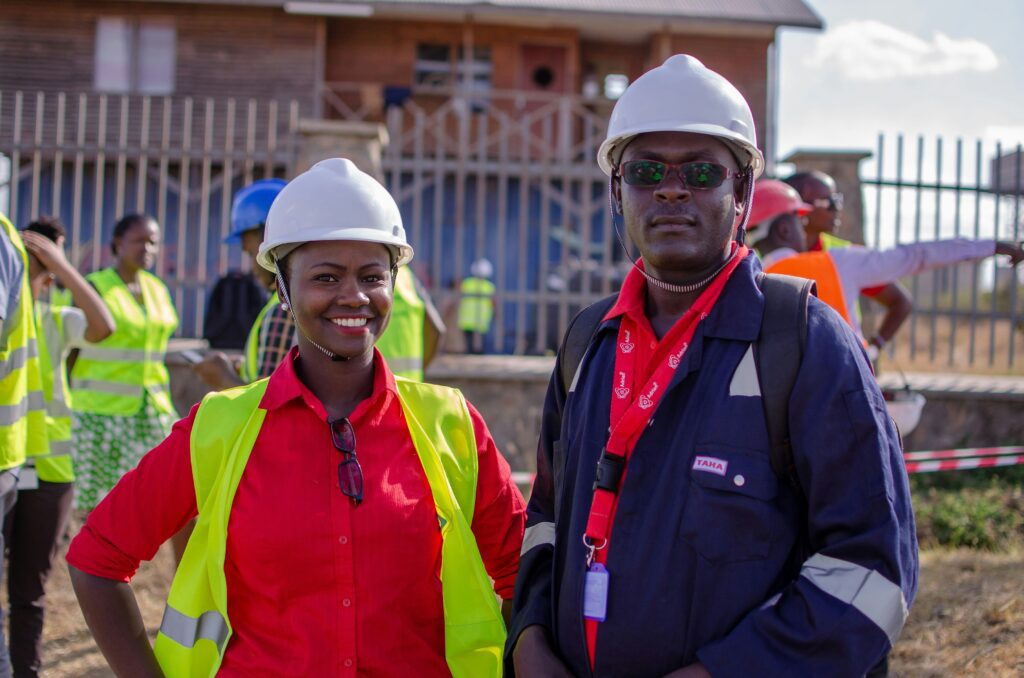
What We Learned in a Collaboration-Focused Visit to Germany
In May 2025, our delegation of partners met with policymakers, recruiters, employers, chambers of commerce, language providers, and diaspora networks in Germany. Several clear insights emerged:
- Language is the critical enabler. Across every meeting, German language proficiency (typically B1–B2) was highlighted as the foundation of success—for workplace safety, technical training, and social integration. Without robust, scalable language preparation in South Africa, pathways will fail to take off.
- Employer appetite is real but uneven. The healthcare sector is most prepared to recruit international talent. Small and medium-sized enterprises (SMEs), while facing the sharpest shortages, often lack the resources to manage recruitment, onboarding, and integration of foreign workers. By contrast, some large firms have strong in-house training systems and domestic pipelines, and so for now show less appetite to recruit apprentices or junior talent from abroad.
- Shared-cost models are essential. Employers are reluctant to bear all pre-departure costs (especially for language training), but candidates cannot shoulder them alone. Shared financing—spanning employers, recruitment and language actors, and possibly candidates—will be critical for equity, scale, and sustainability.
- Integration goes beyond the workplace. Housing, mentorship, cultural orientation, and anti-discrimination safeguards must be built into program design. SMEs, given their size and capacity, will need external support to ensure successful integration.
- South Africa is on the radar—but unproven. Stakeholders expressed openness to South Africa as a source country but emphasized that the country needs to demonstrate strong ecosystems for selection, training, and support of workers.
From Insight to Action
Based on these learnings, our consortium is now working towards a focused pilot in sectors where demand is high and employer receptiveness is strong – such as nursing assistants or selected skilled trades. Key priorities include:
- Scaling high-quality language training in South Africa, with clear progression benchmarks and early exit points for candidates unable to meet requirements.
- Designing sustainable financing solutions that blend employer, worker, and donor contributions while keeping access equitable for workers from different backgrounds.
- Building an end-to-end ecosystem spanning recruitment, training, visa processing, integration, and retention—with carefully selected partners at each stage.
- Addressing inclusion and perception risks by embedding intercultural training, community sensitization, and anti-discrimination safeguards.
Why This Matters
This venture is about more than filling vacancies in Germany. It is about demonstrating that migration can be designed as a win-win solution, providing pathways for South African youth to access quality training and jobs abroad while meeting critical labor needs in Germany. If successful, it will serve as a proof point that structured, ethical, and scalable labor mobility is possible between African countries and Europe.
